
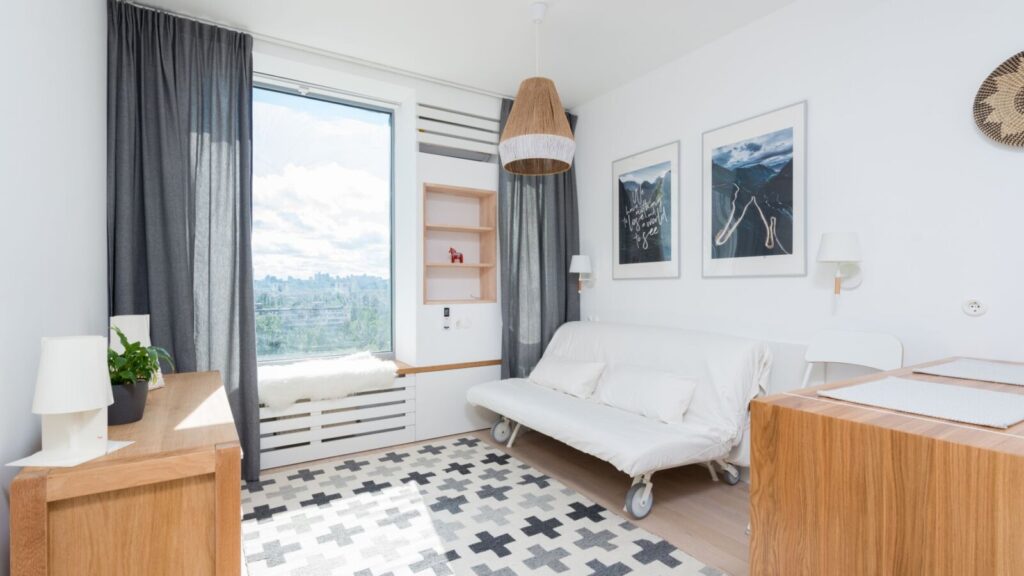
A small living room often feels cramped because too many things interrupt the way you move through it or look across it. The sofa may be comfortable, yet the coffee table catches your knees and every corner seems to hold another item. Changing those relationships can make the room feel more open without changing its footprint.
To make a small living room look bigger, start with movement and visual clarity before buying anything new. Keep the furniture that serves you well, identify what creates the most friction and test one change at a time. The aim is a room that feels comfortable to use, with enough breathing space for the things you enjoy.
Begin With the View From the Doorway
Stand at the entrance and notice the first object your eye meets. A tall chair back, a stack of boxes or an oversized table may stop the view before you have seen the room. Try moving that interruption and compare the impression from the same position.
This does not mean every wall must be bare or every surface empty. You are creating a clearer route for the eye and for your body. A room can still contain books, art and colour while feeling easier to understand as a whole.
Give the Main Walking Route Priority
Identify the route between the door, seating and any balcony, kitchen or adjoining space. Rearrange small tables and occasional chairs so you can walk along it without turning sideways or moving an object first. Try carrying a cup through the route to reveal awkward spots.
If the room has several functions, decide which route needs to stay clear most often. A desk chair or folding dining table should not permanently block the entrance. Put flexibility where you need it instead of expecting every activity to occupy the centre at once.
Choose Furniture by Proportion Rather Than Labels
A piece described as compact can still be too deep for your room, while one well-proportioned sofa may work better than several tiny seats. Measure the usable seat, arm width, overall depth and the clearance the piece needs. Compare those dimensions with how you actually sit and move.
Before replacing a sofa, mark the proposed footprint on the floor and test the surrounding arrangement. Slim arms or a less bulky back may give you more usable seating within the same width. Prioritise comfort alongside appearance, especially for the seat you use every day.
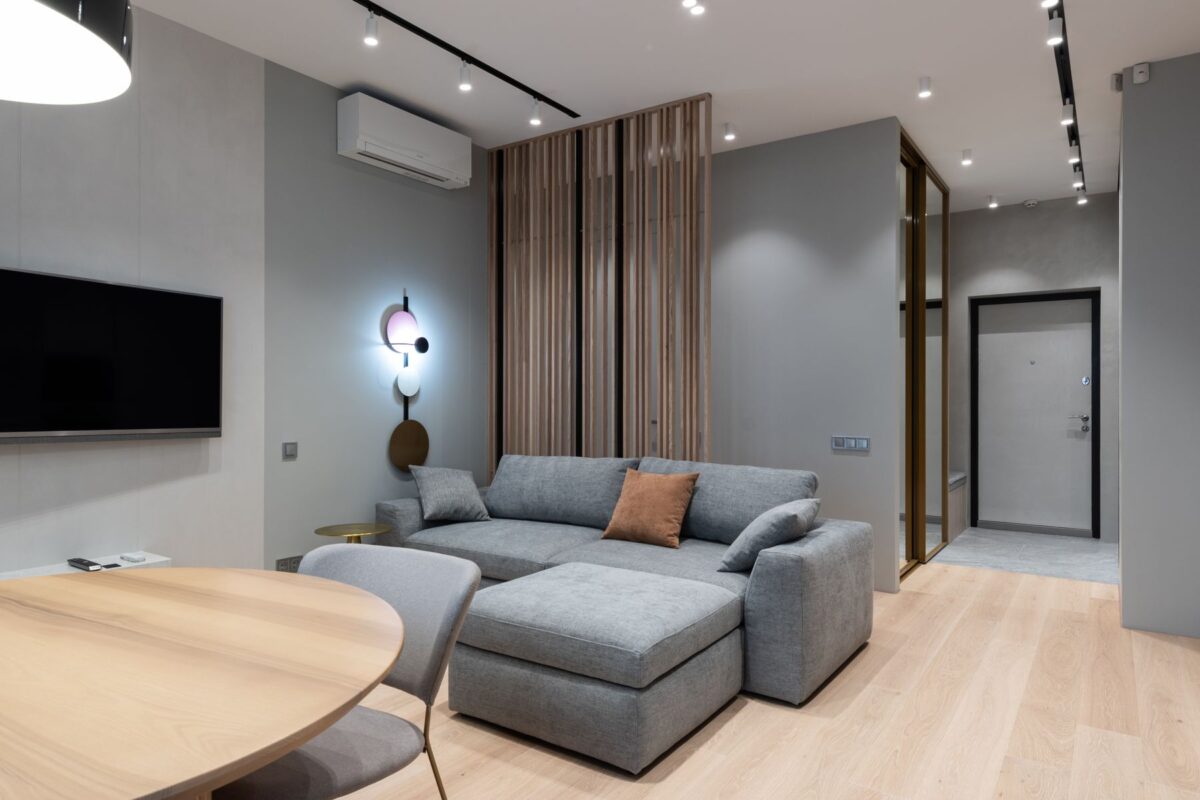
Reduce the Number of Separate Furniture Pieces
A side table, small storage unit and extra stool can each seem harmless on their own. Together, they may create a series of obstacles around the seating area. Consider whether one useful piece can replace two that only partly meet your needs.
An ottoman with appropriate storage or a movable side table can offer flexibility, but check that its extra function is genuinely useful. IKEA’s small living room guidance includes examples of multipurpose furniture. Use that principle to solve a specific problem rather than adding another item simply because it is described as space-saving.
Make Storage Look Like Part of the Room
Give the objects that create daily clutter a convenient home. Remote controls, chargers, paperwork and toys need somewhere easier to use than the sofa or coffee table. Closed storage can quieten the overall view, while a little open shelving lets personal pieces remain visible.
Choose storage around what it must hold and where those items are used. A beautiful narrow cabinet will not help if your everyday objects cannot fit inside it. Secure tall or wall-mounted units using the manufacturer’s guidance and fixings appropriate to the wall.
Use a Connected Palette Across the Main Surfaces
When walls, large furniture and curtains have a clear colour relationship, the room can feel more continuous. They do not have to match exactly. Try connecting them through a similar undertone or repeating a colour in a smaller detail.
Our neutral living room ideas explain how to add texture and contrast without making a restrained palette feel flat. You can still use a dark sofa or a rich wall colour. The important question is whether the combination feels deliberate in your actual light.
Keep the Window Area Visually Clear
Check whether furniture or stored items are covering part of the glass or making curtains difficult to open. Let the window do its job before adding more lighting or reflective surfaces. Clean glazing and a functioning blind can change the room more than another decorative accessory.
If you are replacing curtains, measure the available space for the fabric to gather beside the window. Consider privacy and light control as well as appearance. Avoid placing fabric where it interferes with heating equipment or other fixtures.
Choose a Rug That Connects the Seating
A rug can help the main furniture read as one arrangement rather than separate pieces scattered around the floor. Test the size with tape before ordering, paying attention to the sofa, chairs and walking route. A small isolated rug can sometimes emphasise the empty gaps around it instead of bringing the room together.
There is no single correct size for every room. The rug should work with the furniture you have and sit securely without obstructing doors. Choose a pattern scale that feels comfortable with the other visible details.
Use Mirrors Where the Reflection Helps
A mirror can extend the view when it reflects daylight, a pleasing part of the room or a clear wall. Look at the proposed reflection from the sofa and doorway before installing it. Reflecting a crowded shelf or an awkward corner can simply repeat the visual clutter.
Choose a scale that belongs to the wall and secure it according to its weight and the wall construction. One purposeful mirror usually makes a clearer statement than several small ones added without a plan. Treat it as a useful part of the composition rather than a guaranteed fix for room size.
Light More Than the Middle of the Ceiling
A single central light can leave the ends of a small room feeling forgotten. Put useful light beside the reading seat or near the part of the room you use in the evening. A small lamp may do more for that corner than another piece of furniture.
Keep lamp bases and cables out of the walking route. Use the fittings you already own to test positions before buying replacements. The aim is comfortable visibility and a welcoming atmosphere, rather than making every surface equally bright.
Give Artwork and Accessories Enough Space
A collection of small decorations can make surfaces look busy without giving any one piece room to matter. Remove the items temporarily, then return the favourites in a few deliberate groups. Leave a useful part of the coffee table and side tables clear.
On the walls, test the overall arrangement before making more holes. One substantial piece or a coherent group may feel calmer than unrelated pictures spread around every available gap. Keep the things you love, but let the room show them clearly.
Test the Changes Before Spending
Photograph the room, rearrange it and use it for several days. Notice where you still bump into furniture, leave objects on the floor or struggle to reach a table. Those repeated frustrations tell you what deserves the next adjustment.
Buy only after you can describe the job the new piece will do. Our guide to decorating a living room on a budget can help you decide which improvements deserve the money first. A smaller table, better storage or different curtain treatment may be useful, but each should answer a real need. This approach keeps the room from becoming crowded again during the makeover.
Frequently Asked Questions
Does a small living room have to be white?
No. A coordinated palette and good use of available light matter more than a rule about one colour. Test your preferred shades in the room before painting.
Should the sofa always go against the wall?
Not necessarily. Try the layout that preserves movement and makes conversation comfortable, then compare how it feels from the doorway.
What makes the biggest difference without buying anything?
Clear the main walking route, move visual obstructions and give everyday clutter a home. These changes help you judge what the room actually needs.
Can a small room have large furniture?
Yes, when the dimensions and surrounding clearance work. One comfortable sofa can be more useful than several smaller pieces that interrupt movement.
Make the Room Easier to Live In
A living room feels more generous when its furniture, storage and movement work together. Start with the route through the space, then simplify the visual interruptions and build a connected palette. You may find that the room needs fewer changes than you expected once its existing pieces have room to work.