
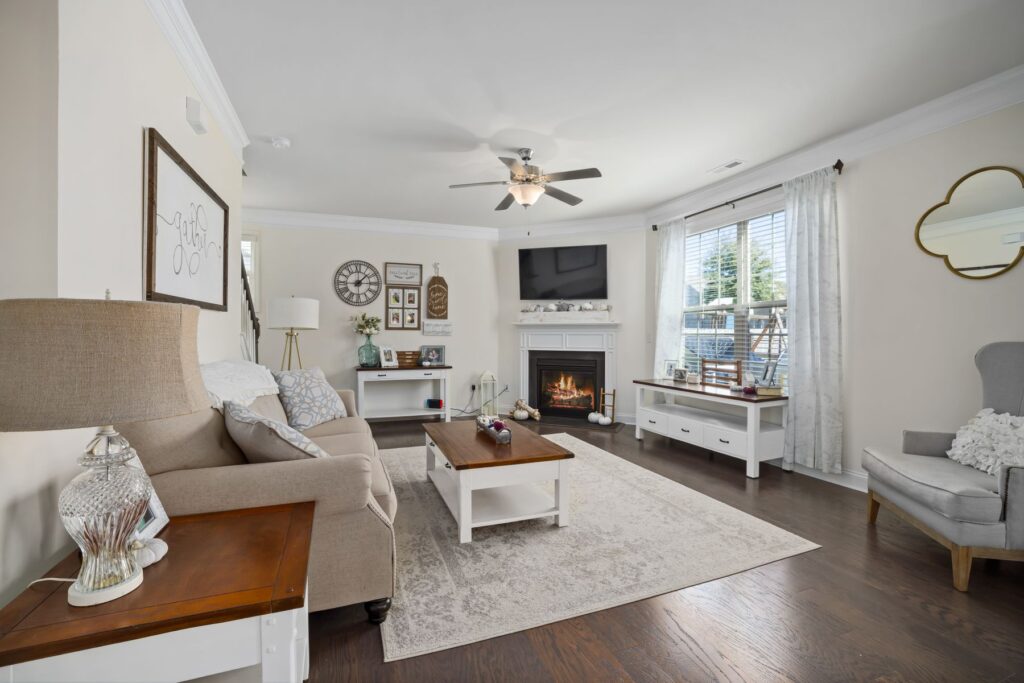
A neutral living room can look beautifully calm in a photograph and still feel a little flat when you sit down in it. You might have the cream sofa, pale walls and wooden table, yet the room seems to be missing something you cannot quite name. Often, the answer lies in the relationships between colour, texture, light and the pieces you already own.
You do not need to replace every large item to make the space feel welcoming. A more useful starting point is to identify what the room lacks: contrast, softness, useful lighting or a sense of personality. These neutral living room ideas will help you make deliberate changes, whether you are furnishing a new home or refreshing a room that has slowly lost its character.
Start With the Colours Already in Your Room
Before choosing another shade of beige, look closely at your flooring, sofa and largest furniture pieces. An oak floor may bring a golden tone, while a grey sofa can lean blue, green or violet. These subtle undertones influence how everything around them appears, particularly when you introduce a new paint colour or a large rug.
Gather the samples you are considering and place them beside the finishes that will stay. Check them in daylight and again under the lamps you use in the evening, because a combination that feels balanced at noon can look quite different after dark. If your existing pieces have several competing undertones, choose one as the starting point and repeat it in a few smaller details.
Build a Palette With Light, Middle and Dark Tones
A neutral palette needs variation to give the eye somewhere to rest and somewhere to focus. For example, you could combine chalky walls, an oatmeal sofa, a medium wood table and a dark brown picture frame. Treat this as a possible arrangement rather than a shopping list, and use the colours already present in your home whenever you can.
If everything sits at the same pale level, try adding one darker object before buying more cream accessories. A charcoal cushion, deep olive vase or walnut side table can give surrounding lighter pieces more definition. Keep these accents connected through colour or material so they feel like part of the room.
Use Texture to Give Simple Colours More Depth
Texture becomes especially noticeable when your colour palette is restrained. Smooth upholstery, a woven throw, a glazed ceramic bowl and visible wood grain each catch the light differently. Combining those surfaces can make a room feel considered even when most of its colours sit within a narrow range.
Begin with the surface that dominates your seating area. A smooth sofa might benefit from a loosely woven cushion cover, while a heavily textured sofa could work well with simpler cotton or velvet accessories. You are aiming for a useful mix, so there is no need to put boucle, rattan, linen, fringe and chunky knits into the same corner.
Let Practical Needs Guide Your Fabrics
A living room should suit the people who use it every day. If children eat on the sofa or a dog claims the armchair, removable covers and fabrics with clear care instructions may matter more than achieving a particular look. Check cleaning requirements before buying, and remember that a delicate fabric will not become easier to maintain because its colour is forgiving.
Make the Seating Area Feel Connected
A room can feel unsettled when its furniture looks as though each piece belongs to a separate arrangement. Pulling a chair a little closer to the sofa or bringing a side table within comfortable reach can make the seating area feel more intentional. Start by thinking about conversation, movement and where people place a drink or a book.
A rug can help define that arrangement, but its relationship to the furniture matters more than choosing a fashionable pattern. Test the proposed size with masking tape before ordering, checking how the edges relate to your seating and walking routes. Where space allows, placing the front legs of the main seats on the rug can help the group read as a single area.
Leave enough room to move through the space comfortably and check any doors that open into it. If a large rug would obstruct a doorway or create an awkward edge, adapt the arrangement instead of forcing a standard styling rule. A smaller room may benefit more from fewer pieces of furniture than from another decorative layer.
Plan Lighting Around How You Spend Your Evenings
If you rely on a single ceiling light, your living room may feel very different after sunset. Try lighting the places you actually use, such as a reading chair, the end of the sofa or a sideboard. A combination of table and floor lamps gives you more control over the room’s atmosphere and helps avoid one bright centre surrounded by dim corners.
For a softer evening effect, you might start by trying a warm-white bulb around 2700K in one existing lamp. Bulb colour is only part of the result: brightness, shade material, lamp position and your wall colours also influence what you see. Test one change before replacing every bulb, and check that any dimmable bulb is compatible with the fitting and dimmer.
Bring in Wood Without Making Everything Match
Wood can give a pale room visual warmth, but buying an entirely matching furniture set is not essential. A light oak cabinet and a darker coffee table can work together when there is a clear connection elsewhere in the room. That link might be a similar finish, a repeated brown tone or another small wooden detail.
If you already have several wood finishes, look at the balance before adding another. One substantial piece can act as the anchor, while smaller pieces provide variation around it. Repeating a finish once or twice usually feels more natural than trying to find an exact match for every leg, frame and shelf.
Add Personality Through Art and Everyday Objects
A neutral room becomes more interesting when it reflects the people living there. A framed family photograph, a print from a memorable trip or a bowl you use regularly can give a shelf more meaning than a group of accessories bought simply to fill it. Choose pieces you enjoy looking at, then give them enough space to be noticed.
When arranging a coffee table, begin with how you use it. You might keep one stack of books and a small bowl while leaving the rest clear for cups, a laptop or a board game. On shelves, vary the height of objects and leave some empty space so that the display remains readable from across the room.
Try a Small Refresh Before Buying Anything Large
If you are unsure where to begin, take a photograph from the doorway and look at the room as a whole. Notice whether the seating feels disconnected, the colours merge together or one area appears crowded. Choose the issue that affects you most and make one change that addresses it.
You could move a lamp beside your favourite chair, swap a cushion cover with one from another room or edit a crowded shelf. Live with the result for a few days before deciding what still needs attention. This gives you a clearer reason for any purchase and reduces the chance of collecting attractive objects that do little for the space.
Frequently Asked Questions
How do you make a neutral living room feel cosy?
Combine a few tactile fabrics, useful evening lighting and some darker tones. Keep comfortable seating and practical surfaces at the centre of the arrangement.
Can you mix grey and beige in a living room?
Yes, although their undertones affect the result. Compare samples in your own light and repeat a shared colour through a rug, artwork or accessories.
Does a neutral living room need colour?
It can feel complete without a bright accent. If you enjoy colour, try a small amount of muted green, rust or blue and see how it works with your existing pieces.
What is the easiest place to start?
Begin with what bothers you most when you use the room. Improving a dim reading corner or an awkward furniture arrangement often has more impact than adding another decoration.
A Warm Room Starts With Thoughtful Choices
The most welcoming neutral living rooms balance a calm palette with enough variation to feel alive. Pay attention to undertones, give simple colours depth through texture and arrange furniture around everyday use. Start with one thoughtful adjustment, then let the way you live in the room guide what comes next.
Featured photo: Curtis Adams on Pexels, used under the Pexels License.